If your dishes come out of the dishwasher with cloudy spots, hard water might be the reason. The same goes if your skin feels dry after a shower no matter what lotion you use. Many homes in Pasadena deal with water carrying higher mineral content than softer-water regions. That’s true across much of the Gulf Coast. A water softener can solve that problem. It’s worth understanding what hard water actually does to your home first.
What Makes Pasadena’s Water Hard
Water is considered hard when it carries elevated levels of dissolved minerals, mainly calcium and magnesium. These minerals get picked up as water travels through soil and rock before reaching your home. Groundwater sources across much of Texas tend to carry more of these minerals than water in other regions. That includes the Gulf Coast, where levels often run higher than in other parts of the country.
Hard water isn’t unsafe to drink. It’s simply mineral-rich water that behaves differently than soft water once it interacts with soap, appliances, and plumbing. Over time, those differences add up in ways that are easy to miss until you know what to look for.
Signs You’re Dealing With Hard Water
It’s not always easy to tell that you have hard water, but there are some hints that you may have an issue.
A few common signs point to hard water in your home:
- Spots on dishes and glassware. Mineral deposits left behind after water evaporates create a cloudy, chalky film. Many homeowners notice it on dishes straight from the dishwasher.
- Soap that won’t lather well. Hard water reacts with soap to form a film rather than a rich lather. You may find yourself using more soap or shampoo than you used to for the same result.
- Dry skin and dull hair. That same mineral film can be left behind on skin and hair after washing. Both can end up feeling less clean than they actually are.
- Scale buildup around faucets and showerheads. A chalky white residue around fixtures is mineral scale. It tends to build up gradually until it’s hard to ignore.
- Reduced water pressure. As scale accumulates inside pipes, it can narrow the interior diameter enough to noticeably affect flow over time.
- Appliances wearing out faster than expected. Water heaters, washing machines, and dishwashers all work harder when mineral buildup interferes with their internal components.
How Hard Water Affects Your Home
The cosmetic issues are the easiest to notice. The bigger cost of hard water shows up in your plumbing and appliances. Mineral scale builds up inside pipes and fixtures the same way it builds up on a showerhead. It just happens out of sight. Over years, that buildup can restrict flow and put extra strain on your plumbing system.
Your water heater takes some of the hardest hits. Scale accumulates on heating elements and inside tanks. That forces the unit to work harder to heat the same amount of water. This can shorten a water heater’s lifespan and increase energy costs in the process. A water heater that would normally last well over a decade may need earlier repairs. That’s common in homes with consistently hard water.
How a Water Softener Works
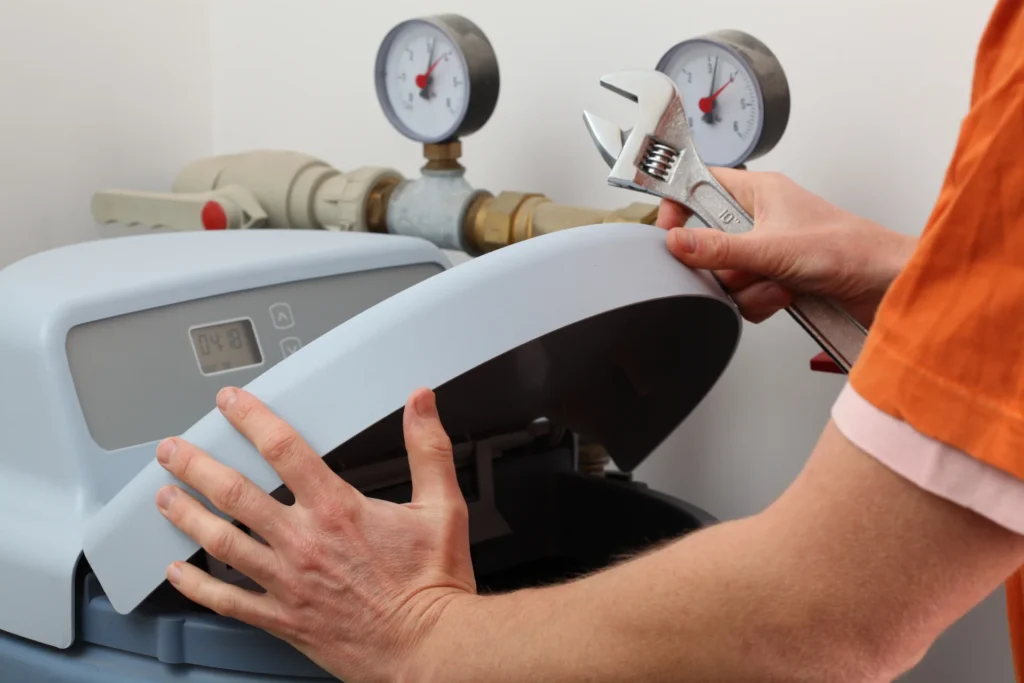
A water softener uses a process called ion exchange. It removes calcium and magnesium from your water before it reaches your fixtures and appliances. Water passes through a tank filled with resin beads. Those beads attract and hold onto the hard minerals, releasing sodium or potassium ions in their place.
Once the resin becomes saturated with minerals, the system flushes itself with a saltwater solution. This regeneration cycle restores the resin’s capacity to keep softening water. Most modern systems handle this process automatically, requiring only periodic refills of the salt or potassium supply.
The result is water that lathers more easily and leaves less residue behind. It also puts less mineral stress on your pipes and appliances over time.
What to Consider Before Installing One
A water softener is a whole-home system, not a single-fixture fix. It’s installed at your main water line. That means it treats water going to every faucet, showerhead, and appliance in the house. That also means sizing matters. A system that’s undersized for your household’s water usage won’t keep up. An oversized system just adds unnecessary cost.
Maintenance is also part of the equation. Softeners need their salt or potassium supply replenished periodically. The system itself also benefits from occasional professional servicing. That keeps the resin and valves functioning properly.
If you’re also noticing slow drains or mineral buildup affecting flow throughout your home, it’s worth a broader look. A plumber can check your drains while assessing whether a softener makes sense for your situation.
Is a Water Softener Worth It?
For most Pasadena homeowners dealing with the signs above, the answer is yes. The upfront cost of a softener is generally offset over time. It extends appliance lifespans, reduces water heater strain, and cuts down on soap and cleaning product use. It’s also simply more comfortable day to day, from softer laundry to better lathering in the shower.
The clearest way to know for sure is to have a licensed plumber assess your water. They can also evaluate your home’s specific plumbing setup. Air Tech of Pasadena has served this community since 1989. Our licensed plumbers operate under plumbing license RMP44203. They can walk you through whether a softener fits your household’s needs. They’ll also help you figure out what size system makes sense.
Curious whether a water softener is right for your home? Reach out to schedule a water softener consultation. Or call us at (281) 356-0714 to talk through what you’re noticing with your water.

Why Choose Air Tech of Pasadena?
Pasadena’s Reliable Heating, Cooling, Plumbing and Electrical Company

Peace Of Mind Guarantee

30% Utility Savings Guarantee

100% Money Back Guarantee